
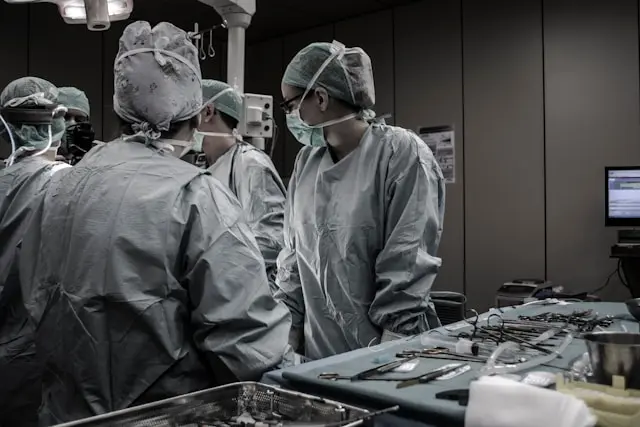
The hospital’s name, location and exact connected load are withheld under a confidentiality agreement with the client. What follows describes the scope, equipment and outcome of the installation as delivered.
The hospital
A large multi-specialty hospital running 24×7 came to Bluebird with a problem familiar to facilities of this size: the incoming utility supply wasn’t stable enough for the equipment depending on it. Imaging suites, operation theatres, ICU monitoring, a diagnostic laboratory, blood bank refrigeration and a small data centre all draw from the same distribution network, and none of them tolerate a supply that drifts outside a narrow band.
What was going wrong
The hospital’s facilities team had traced a pattern of problems back to the incoming supply rather than the equipment itself:
- Frequent voltage fluctuations from the utility feed, with both under-voltage and over-voltage conditions
- Imbalance between the phases feeding different parts of the building
- Unplanned shutdowns on sensitive equipment during voltage events
- Rising maintenance and component-replacement costs on the affected systems
MRI and CT scanners, ultrasound systems, ventilators, lab analysers and the blood bank’s cold storage were flagged as the highest-risk equipment, both for the cost of replacement and for what a failure mid-use would mean for a patient.
The installation
Bluebird supplied and commissioned automatic servo voltage stabilizers at multiple points in the hospital’s electrical distribution network, rather than one unit for the whole building. A main-line stabilizer sits between the LT panel and the general distribution board, correcting voltage for the building’s broad load. Dedicated stabilizers were then installed closer to the equipment that couldn’t share that level of protection with everything else on the same board, principally the blood bank and pharmacy refrigeration and the radiology department’s imaging equipment.
The exact number of units and their individual capacities are part of the confidential scope of this project. As a general reference, hospitals in the 2 to 5 MVA connected-load range typically split protection across departments rather than centralizing it in one stabilizer, roughly along these lines:
| Hospital area | Typical equipment protected |
|---|---|
| Radiology | MRI, CT, X-ray |
| Operation theatres | Surgical and monitoring equipment |
| ICU / NICU | Life-support and monitoring systems |
| Laboratory | Diagnostic analysers |
| Blood bank | Refrigeration and freezer systems |
| Data centre | Servers and networking equipment |
| HVAC plant | Chillers, AHUs, pumps |
| General services | Lifts, escalators, lighting |
What changed
With correction happening automatically ahead of the equipment, the hospital’s facilities team stopped treating voltage events as a recurring fire drill. Equipment that had been tripping or resetting on supply fluctuations kept running through them instead, and the maintenance load tied to voltage-related component failures dropped. Refrigeration for the blood bank and pharmacy was fitted with start-delay protection on its compressors, so a brief power cut doesn’t send every unit restarting into the grid at once.
None of this replaced the hospital’s UPS or backup generator infrastructure, which handle actual outages. The stabilizers only address supply that’s present but out of range, which, for a facility this size, turned out to be the more frequent problem.
Bluebird has manufactured automatic and servo voltage stabilizers out of Delhi for over 40 years, tested to IS 8448 and built under an ISO 9001:2015 quality system. For a hospital-scale installation, sizing and configuration should be worked out from your own load schedule and transformer capacity before equipment is ordered.