
A diagnostic analyser restarts halfway through a run. A CNC controller throws faults every afternoon, when the neighbouring units switch on their heavy machinery. A server room’s UPS keeps dropping to battery even though there has been no power cut. In cases like these, the equipment is often fine, and the problem is the voltage reaching it.
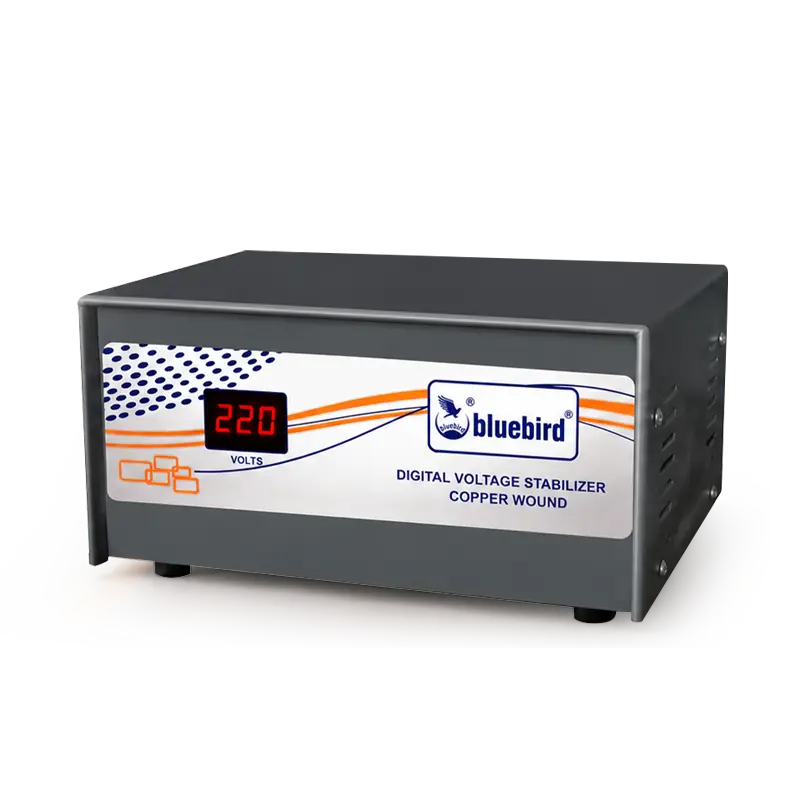
Servo stabilizers for sensitive equipment address one specific part of this problem: they keep the supply voltage within the range the equipment was designed to accept. This article explains what that involves, where it matters most, and what to check before choosing one.
Why Sensitive Equipment Needs Voltage Protection
Electrical equipment is designed around a nominal supply, typically 230 V for single-phase and 415 V for three-phase connections in India, with a permitted tolerance either side. Trouble starts when the supply stays outside that window.
Under-voltage is a sustained drop below the rated level, common at the end of long distribution lines or during peak demand. Power supplies inside electronics compensate by drawing more current, which increases heat, and motors may struggle to start or stall. The visible symptoms are resets, errors, and unexpected shutdowns.
Over-voltage is a sustained rise above the rated level. It stresses insulation, capacitors, and semiconductors, and can shorten component life over time.
These are different from transients (brief spikes caused by lightning or switching), harmonic distortion, frequency variation, and outages. A servo stabilizer is built for sustained voltage variation, not for these.
Not every fluctuation is harmful. Many modern devices use wide-input power supplies that tolerate a broad range, and a minor deviation may do nothing at all. The real question is whether your supply regularly leaves the range your equipment’s datasheet specifies.
How Servo Stabilizers Protect Sensitive Equipment
A servo voltage stabilizer works as a closed feedback loop. A control circuit continuously samples the output voltage and compares it with a set reference. When the output drifts, the circuit signals a servo motor, which moves a contact along the winding of a variable transformer (an autotransformer). Changing that contact position changes the transformer ratio, and the adjustment is passed through a second transformer wired in series with the supply. Depending on the input, it adds a little voltage or takes a little away.
Because the contact moves smoothly along the winding rather than jumping between fixed taps, correction is continuous. That is why servo designs are associated with precision voltage regulation and are often preferred where tight output tolerance matters.
The same mechanism has limits. The motor needs time to move, so very rapid sags and spikes are corrected with some delay. A stabilizer also does not store energy, so it cannot keep equipment running through an outage, and it is not designed to suppress lightning surges. It corrects voltage level and nothing else.
Applications of Servo Stabilizers in Sensitive Equipment
Medical and Diagnostic Equipment
Imaging systems, pathology analysers, and patient monitoring equipment can behave unpredictably when supply voltage is unstable, from unexpected resets to interrupted procedures. A servo stabilizer for medical equipment must be sized for the load, including the high momentary current some imaging devices draw at startup. Check the manufacturer’s input requirements, since some devices already regulate internally, and remember that life-support equipment needs backup power as well.
Laboratory and Research Instruments
Spectrophotometers, chromatographs, incubators, and analytical balances often run for hours, sometimes overnight. A supply that sags mid-run can interrupt the process or affect stability, and repeating a long experiment costs time and materials. A servo stabilizer for laboratory equipment helps give such instruments a steady supply, though the manufacturer’s installation guidance should still take precedence.
IT Infrastructure and Supporting Electrical Systems
In server rooms, a UPS usually protects the IT load directly. Where the incoming supply is poor, though, the UPS may switch to battery repeatedly for sustained sags, which wears the batteries faster. A stabilizer ahead of the UPS, or on supporting systems such as precision cooling, can reduce that burden.
Industrial Automation and Precision Machinery
PLCs, variable-frequency drives, CNC machines, and process controllers are sensitive to dips that cause nuisance trips or positioning errors. An industrial servo stabilizer is typically three-phase, so it is worth checking whether the load is balanced across phases and whether each phase needs independent correction.
Telecommunications and Electronic Systems
Exchanges, base stations, and broadcast equipment often sit at the far end of weak supply lines, where voltage swings are common. Stabilization works alongside battery and generator backup here, not in place of it.
Key Benefits of Using Servo Stabilizers
The main benefit is output voltage held within a defined band despite input swings, which reduces the chance of voltage-related malfunctions such as resets, faults, and unstable readings. For operations where downtime or repeated runs are costly, that translates into steadier day-to-day reliability.
Where voltage instability contributes to component stress, a stable supply can also support equipment longevity. That is a contributing factor, not a guarantee, since failures have many causes. A stabilizer does not eliminate electrical faults or promise a fixed lifespan or energy saving.
What to Consider Before Choosing a Servo Stabilizer
- Load capacity: Add up the connected load, allow for startup currents, and leave headroom.
- Input voltage range: Measure your actual supply over time, since the stabilizer must cover the extremes you see.
- Output accuracy: Compare the regulation tolerance with your equipment’s rated input window.
- Phase requirements: Single-phase or three-phase, and whether per-phase correction is needed.
- Response time: Consider how quickly your supply changes and how sensitive the load is.
- Installation conditions: Ventilation, dust, humidity, and available space matter for long-term performance.
Ask suppliers how their units are tested before dispatch; Bluebird describes its approach on its manufacturing and testing page.
Also remember that a stabilizer covers one layer. A UPS addresses outages, surge protection devices handle transients, and proper earthing underpins safety and protection overall. Which of these you need depends on your equipment and supply.
Conclusion
Reliable equipment operation starts with a supply that stays inside the range the equipment expects. Where sustained under-voltage or over-voltage is the issue, servo stabilizers for sensitive equipment provide a practical, continuous correction. They work best alongside the right surge protection, earthing, and backup power.
If you are assessing options, Bluebird servo voltage stabilizer is a good to review the range.
FAQs
1. Does a servo stabilizer protect against power cuts or lightning surges?
No. It corrects sustained voltage variation. Outages need a UPS or generator, and surges need surge protection devices.
2. Do all sensitive devices need a servo stabilizer?
Not necessarily. Some equipment has wide input tolerance or internal regulation. Compare the equipment’s specified input range with your measured supply conditions.
3. How do I choose the right capacity?
Total the connected load, account for startup currents, and add margin. Confirm single-phase or three-phase needs and check the manufacturer’s guidance for the equipment.